
01 · Project overview
Replacing fragmented operations with one connected system.
A leading commercial bank in Nigeria managed procurement and inventory across a large branch network using manual tools and disconnected processes. Vendor records, purchase requests, approvals, and inventory updates moved through spreadsheets, email, and phone calls.
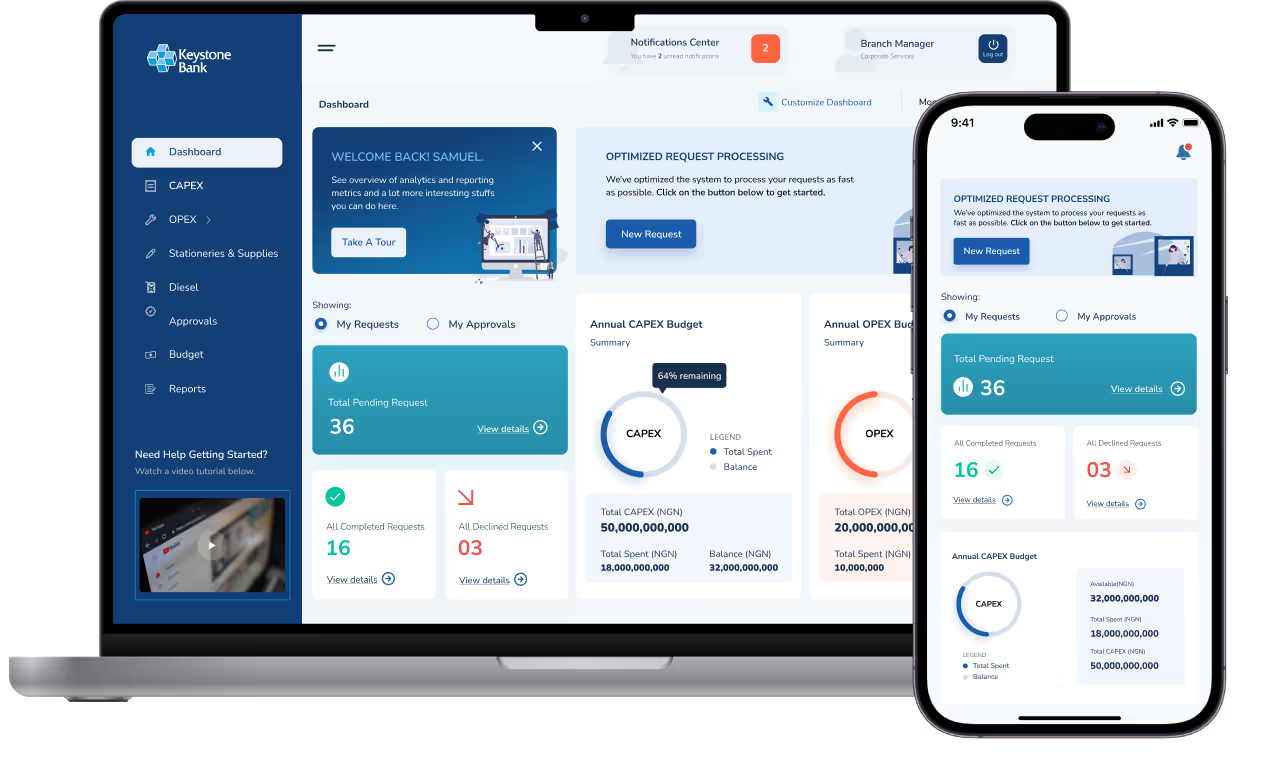
I worked as part of a three-person design team to shape a tailored Source to Settle platform. The product brought procurement workflows, vendor management, inventory control, and organisational approvals into one accountable system.
The work required us to understand how requests moved through multiple roles, where information became lost, and how the bank could improve operational control without slowing people down.
02 · Problem context
Scale had turned everyday procurement into an operational risk.
The bank needed to coordinate purchases and stock across departments and branches, but the existing workflow offered little shared visibility. Teams spent time chasing approvals, reconciling different records, and reacting to stock shortages after they happened.
Slow approvals
Layered sign-offs were difficult to track, creating delays and repeated follow-ups.
Fragmented vendor data
Contract details and performance history were not managed from one dependable source.
Limited stock visibility
Branches could not reliably see inventory levels or coordinate transfers.
Weak auditability
Manual processes made compliance, accountability, and regulatory evidence harder to maintain.
03 · Goal
Make procurement visible, controlled, and easier to complete.
The business wanted a system that could improve inventory accuracy, keep procurement spending closer to approved budgets, and reduce waste across the branch network.
Create a dependable operating system for requests, approvals, vendors, budgets, and inventory, while preserving the controls expected inside a commercial bank.
04 · Research and discovery
Understanding the people behind every approval and stock movement.
We interviewed procurement officers, inventory managers, branch staff, division heads, and regional leaders. Surveys helped us validate recurring patterns across a broader set of stakeholders.
Research showed that the problem was not simply missing software. Each role needed a different level of information and authority. The platform had to make the current stage of a request obvious, show inventory across locations, and preserve a clear decision trail.
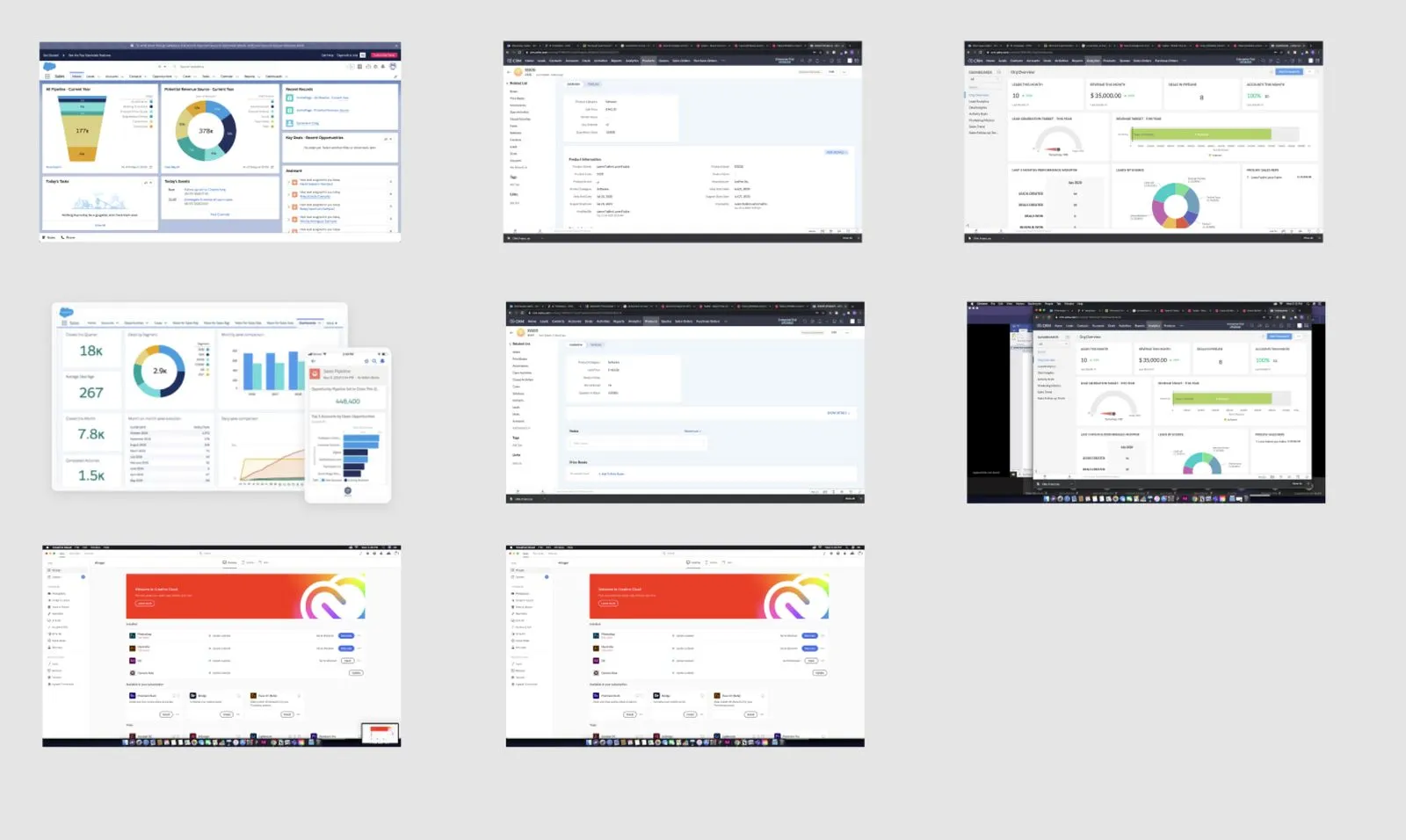
A competitive review of procurement platforms helped us identify useful patterns in automation, spend tracking, and vendor management. It also exposed a gap for institutions with complex approval hierarchies and multi-branch operations.
Clarity
People needed to know who owned the next action and why a request was delayed.
Coordination
Branches needed one view of stock before creating new purchase requests.
Control
Approvals and vendor decisions needed traceable rules and audit history.
05 · Design process
Moving from organisational complexity to a coherent product model.
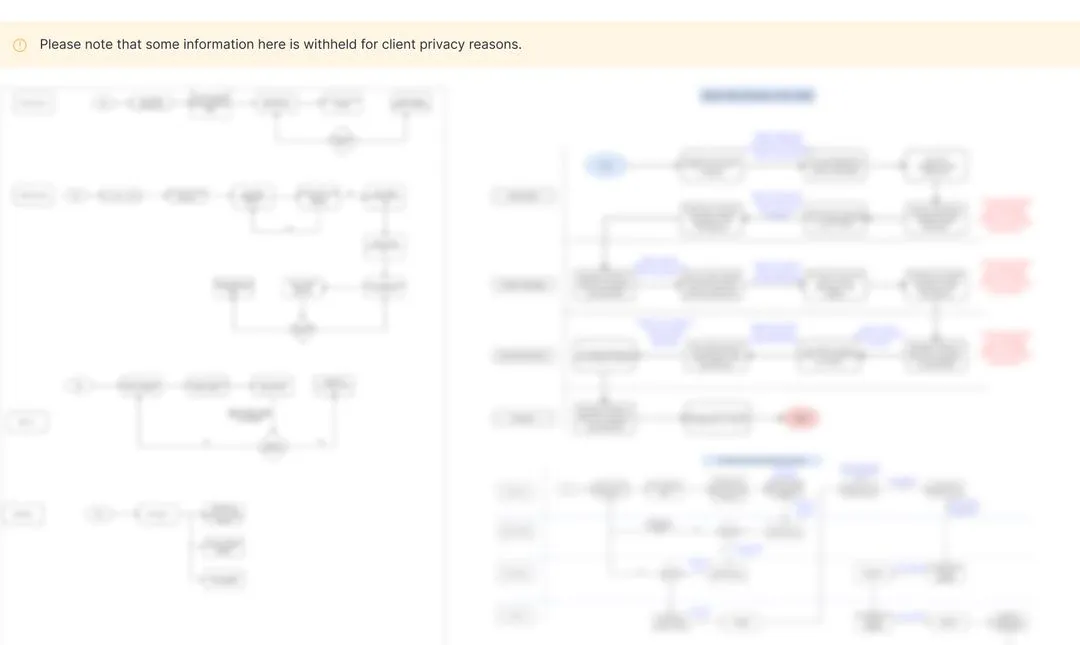
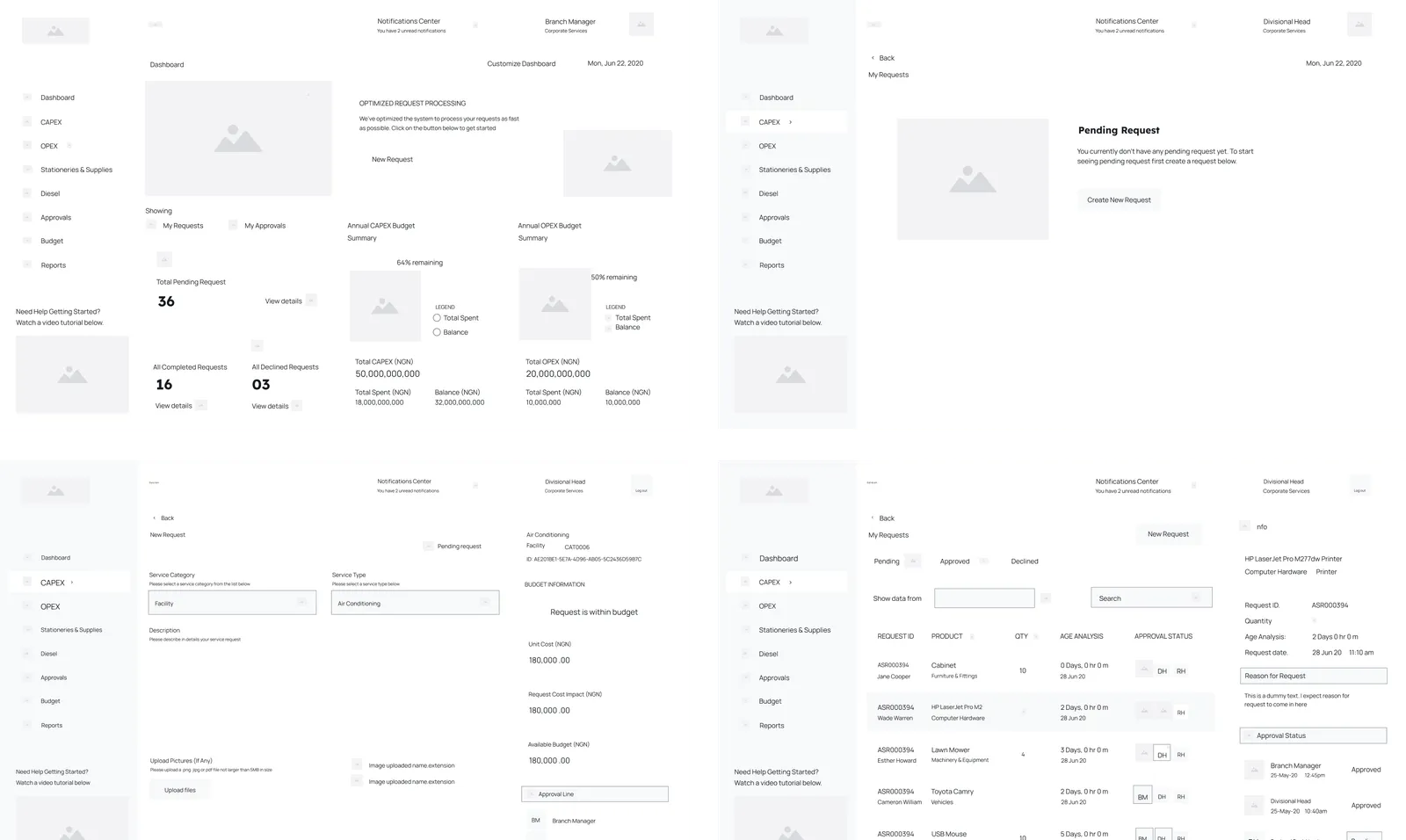
We mapped the end-to-end request and approval flow, then translated it into role-aware information architecture. Early concepts focused on dashboards, configurable approvals, vendor records, stock visibility, and the exceptions that required human judgement.
Wireframes allowed the team to review structure before visual detail. A moodboard established a direction that felt professional, trustworthy, and modern without becoming visually heavy. Prototypes then connected the modules into realistic workflows for stakeholder review.
06 · Testing
Testing the workflow with the roles that would operate it.
We tested prototypes with procurement officers, inventory managers, and branch staff using realistic scenarios: submitting a request, approving it across multiple levels, locating stock, and managing a vendor contract.
Users valued the clearer workflow but asked for stronger visual progress indicators, faster inventory filtering, and better vendor reporting. We added approval-stage visibility, improved search and filters, and introduced reporting and contract alerts.
The developed product was then tested for usability, permissions, performance, and concurrent activity across branches.
07 · Solution
One platform for requests, approvals, vendors, and inventory.
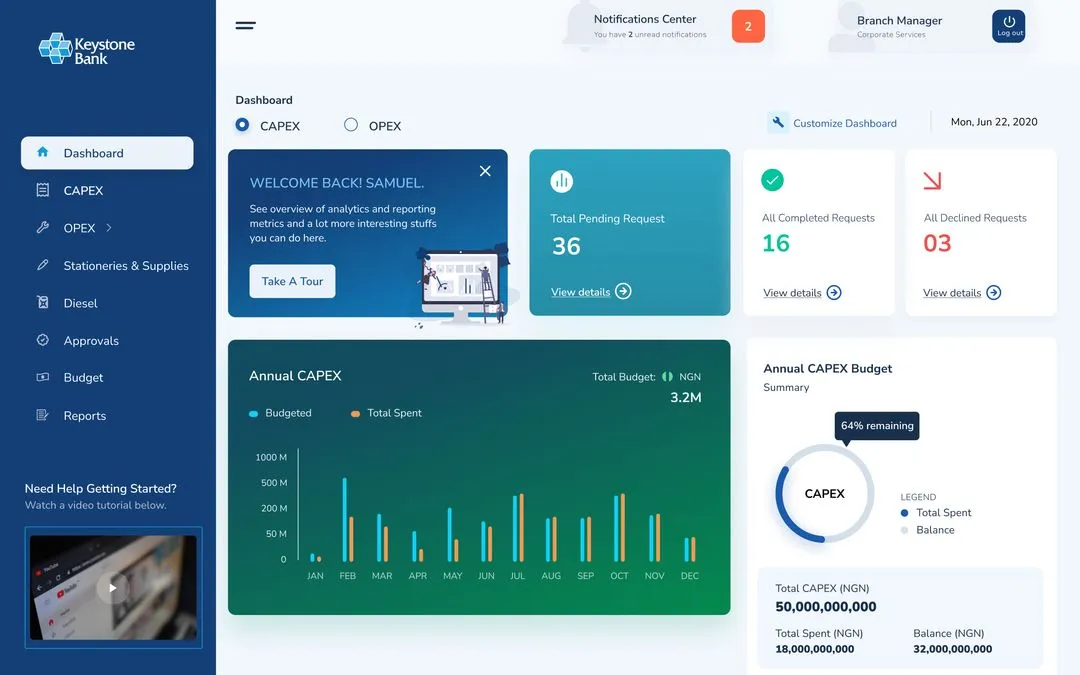
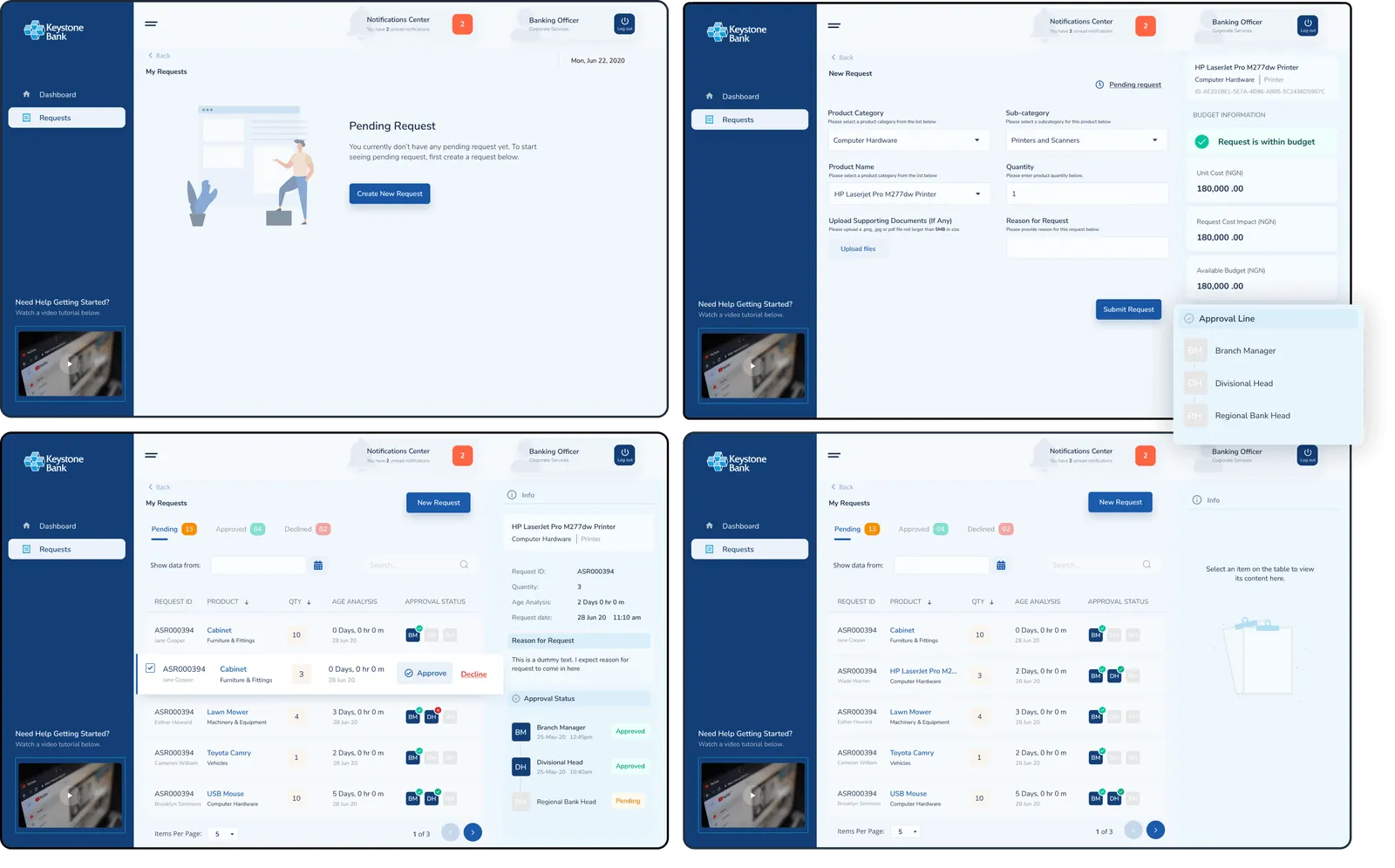
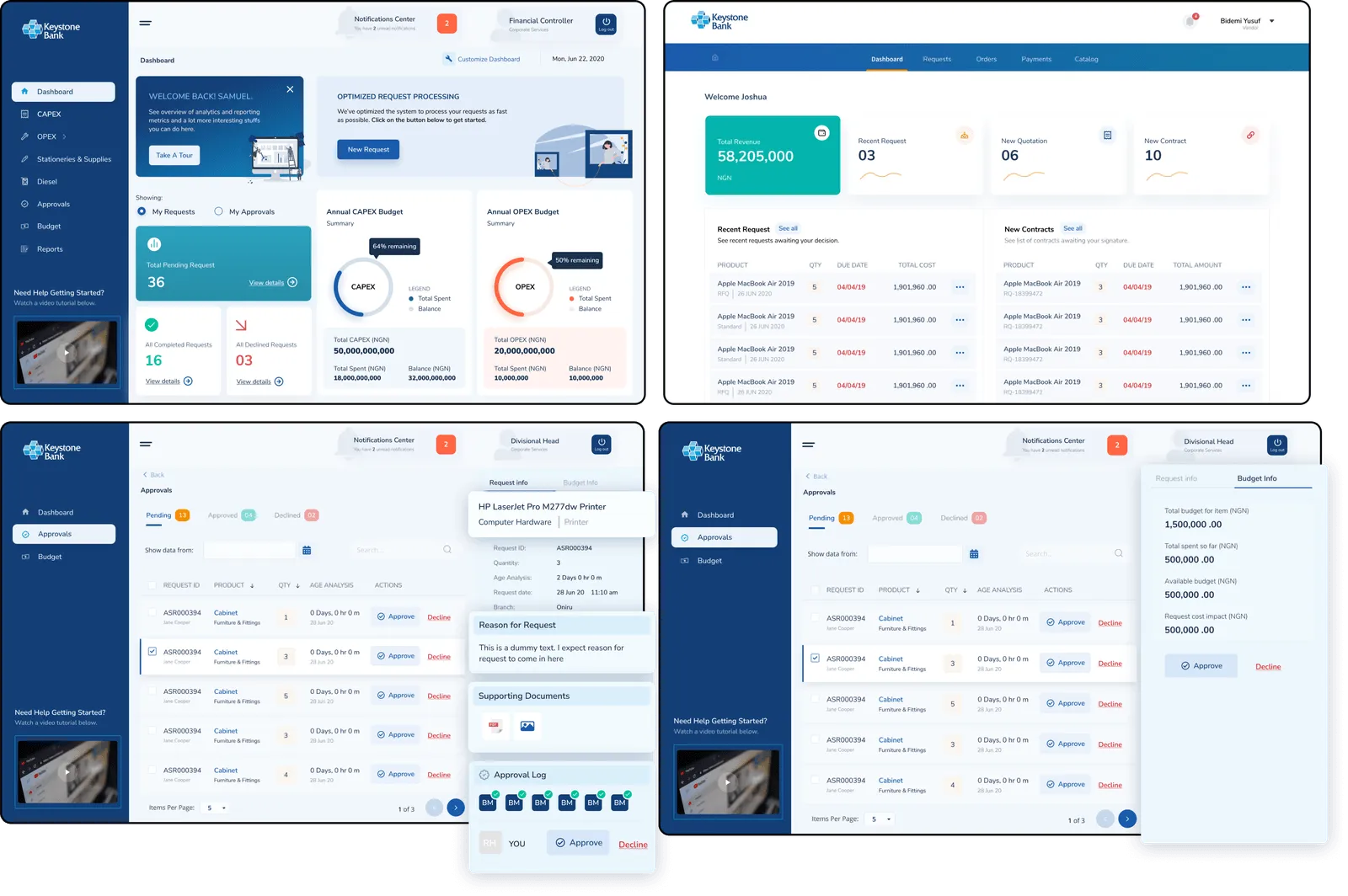
The final platform connected procurement and inventory work while respecting the bank's organisational structure. Role-based views helped branch managers, division heads, and regional leaders act on the information relevant to them.
Automated notifications reduced follow-up, approval progress made ownership visible, real-time inventory views supported better allocation, and the vendor module centralised contracts, performance, and renewal activity.
08 · Results and learning
The strongest enterprise products make responsibility visible.
The work replaced a collection of manual activities with a more consistent, traceable workflow. Teams gained clearer procurement status, stronger inventory visibility, and a central record of vendor and approval activity.
The project reinforced the importance of designing around roles, permissions, and real organisational behaviour. In complex enterprise systems, a clear interface is valuable because it helps people understand not only what happened, but who needs to act next.
Reflection
Complex systems become usable when responsibility is visible.
This project deepened how I think about enterprise software. The difficult part was not simply connecting procurement, approvals, vendors, and inventory. It was helping every role understand what had happened, what required attention, and who needed to act next.
It reinforced that clarity in an enterprise product comes from modelling the organisation honestly, then revealing only the information each person needs to move the work forward.
A clear enterprise interface makes responsibility, progress, and exceptions easier to understand.