
Project overview
A decisioning layer for modern risk operations.
Watchtower helps teams monitor transaction activity, detect suspicious behaviour, review risk, investigate alerts, and take structured action in real time. The product combines operational clarity with an AI-native direction while keeping sensitive decisions explainable and reviewable.
My founder role
Shaping the product across disciplines.
I set the product direction, designed the risk operations experience, and contributed to implementation. The role connects customer needs, product strategy, interaction design, system behaviour, and company building.
Watchtower within Remllo
One product in a connected risk and identity ecosystem.
Remllo is building AI-native risk, identity, and compliance infrastructure for regulated businesses. Watchtower focuses on the transaction layer, connecting monitoring, risk controls, alerts, investigations, decisions, and audit history.
AI-native infrastructure for regulated businesses
Identity verification
Understanding the people and businesses behind financial activity.
Compliance management
Supporting structured compliance work across regulated operations.
Watchtower
Monitoring transactions, detecting suspicious behaviour, and supporting risk decisions.
Why we built it
Detection is only useful when a team can understand and act on it.
Financial institutions process large volumes of activity every day. Some transactions are normal, some require review, and some need to be stopped. The harder problem is connecting the signal to enough context, a clear decision, and an accountable next action.
Questions behind every review
- 01Is this transaction normal for this customer?
- 02Does the activity match a risky pattern?
- 03Should it be allowed, reviewed, or blocked?
- 04Why was it flagged and what happened next?
Incomplete context
Transaction, customer, and investigation data can live in separate systems.
Noisy alert queues
High alert volumes make meaningful activity harder to prioritise.
Disconnected investigations
Notes, decisions, and supporting evidence may sit outside the transaction record.
Scattered accountability
Audit history and reporting can require time-consuming manual collation.
Core product challenge
Real-time decisions without a black box.
Fraud and compliance teams need speed, but they also need to understand why activity was flagged, what evidence informed the outcome, who reviewed it, and what action followed. The experience had to support both immediacy and accountability.
How do we help financial institutions make faster transaction decisions while keeping the process explainable, auditable, and controlled?
Fast decisions should still be explainable decisions.
AI-native direction
AI as an interpretation layer, not an invisible decision-maker.
AI is part of how Watchtower helps analysts interpret activity, understand alerts, and move through investigations. The goal is not silent automation of sensitive decisions. It is clearer context and stronger support for the people accountable for acting on risk.
Interpret activity
Summarise suspicious behaviour and make transaction context easier to understand.
Explain risk
Help analysts understand why an alert or transaction may need attention.
Support investigation
Assist with case narratives, investigation notes, and next-step guidance.
Prepare records
Help teams create clear, compliance-ready reports without hiding human judgement.
The decisioning model
Three outcomes create a shared language for action.
The underlying evaluation can account for many signals, but the returned outcome needs to remain understandable across fraud analysts, compliance officers, operations teams, developers, and business stakeholders.
Allow
The transaction is safe enough to proceed.
Continue processingReview
The activity needs analyst attention and additional context.
Create an alert or caseBlock
The transaction presents enough risk to stop.
Prevent processing and record the decisionSelected product screens
The operating experience behind the product model.
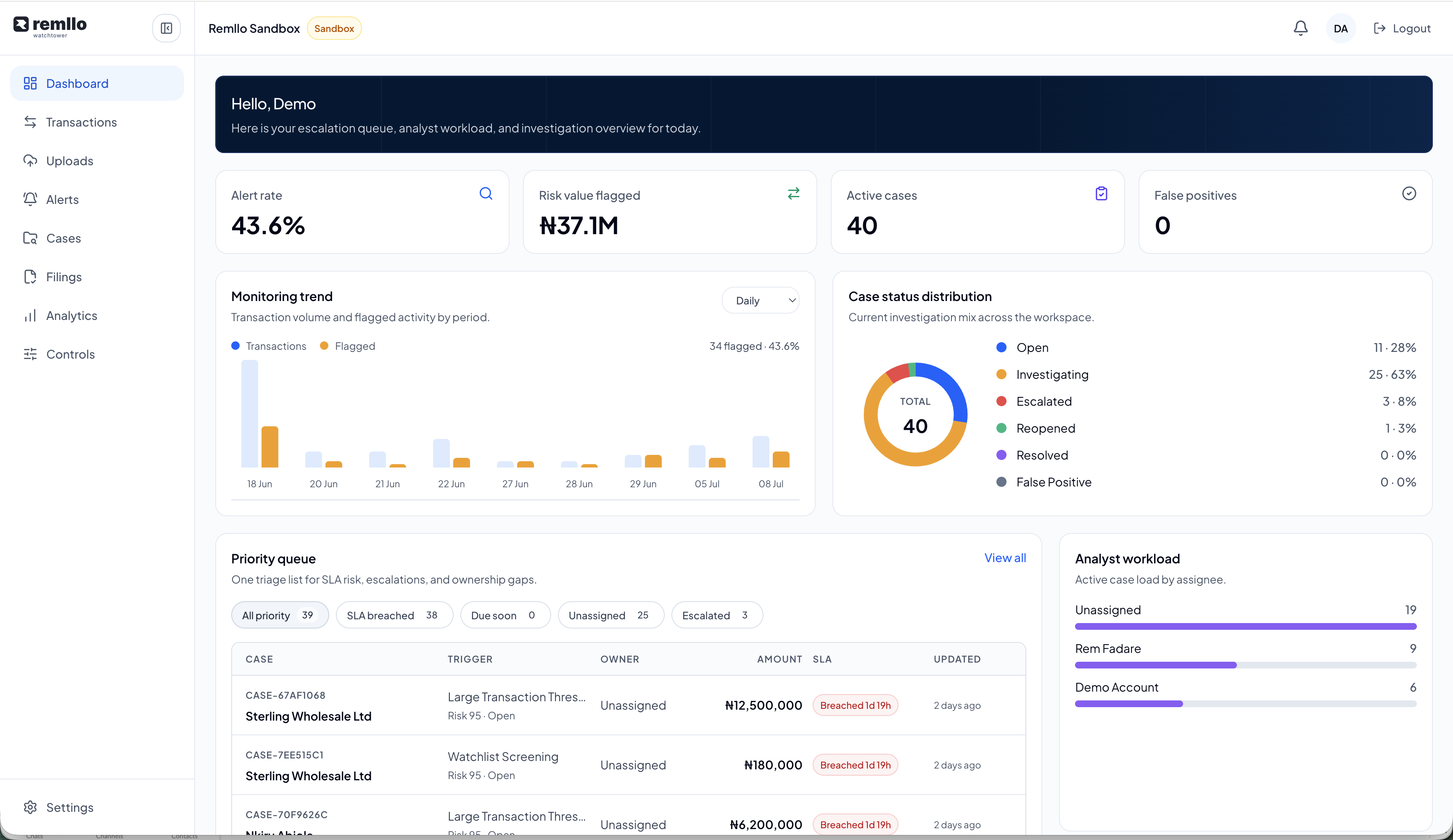
These screens show how the high-level ideas translate into daily risk operations: monitoring activity, prioritising work, investigating cases, and preparing regulatory records.
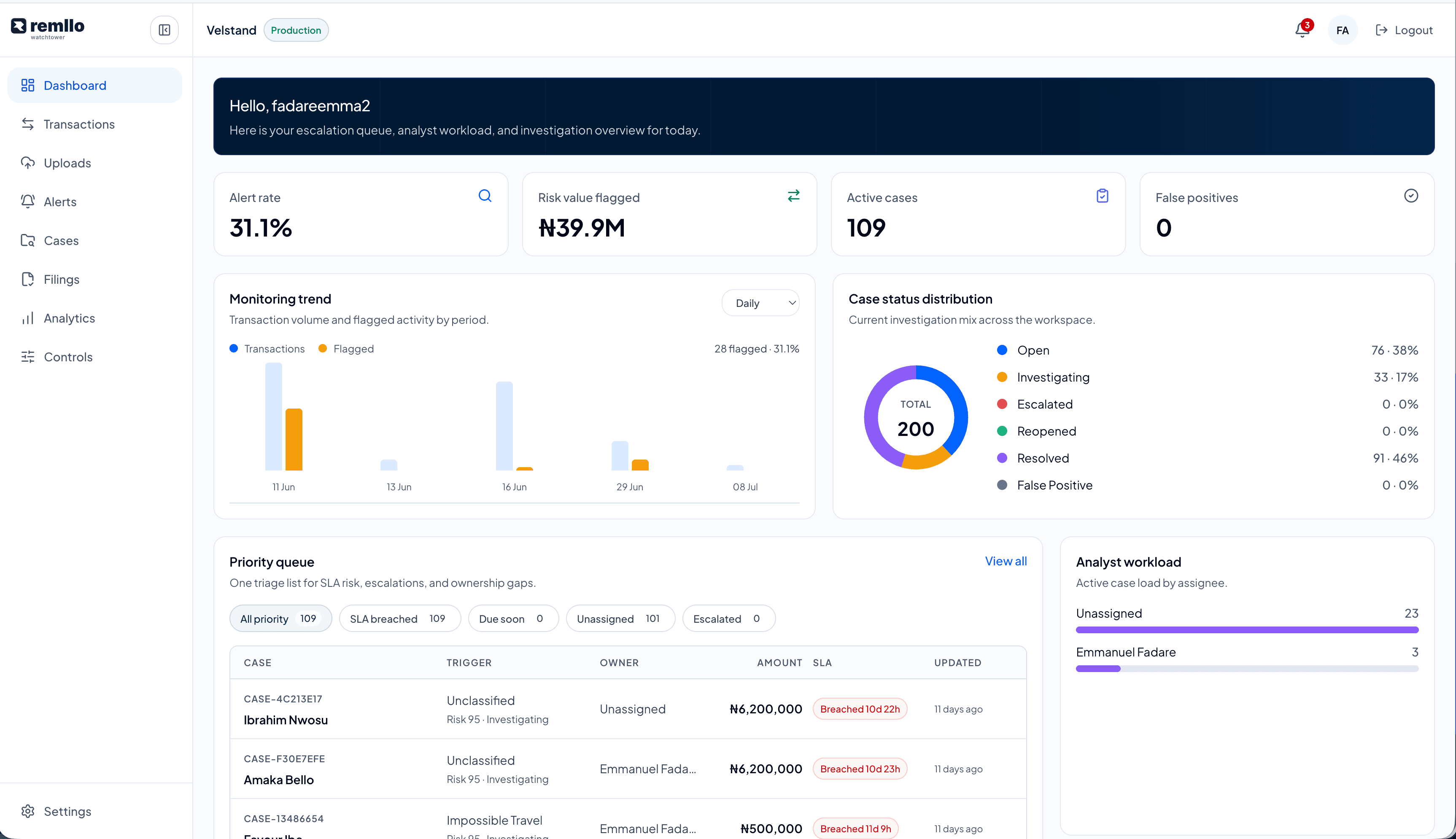
A shared view of monitoring pressure, investigation status, priority queues, and analyst workload.
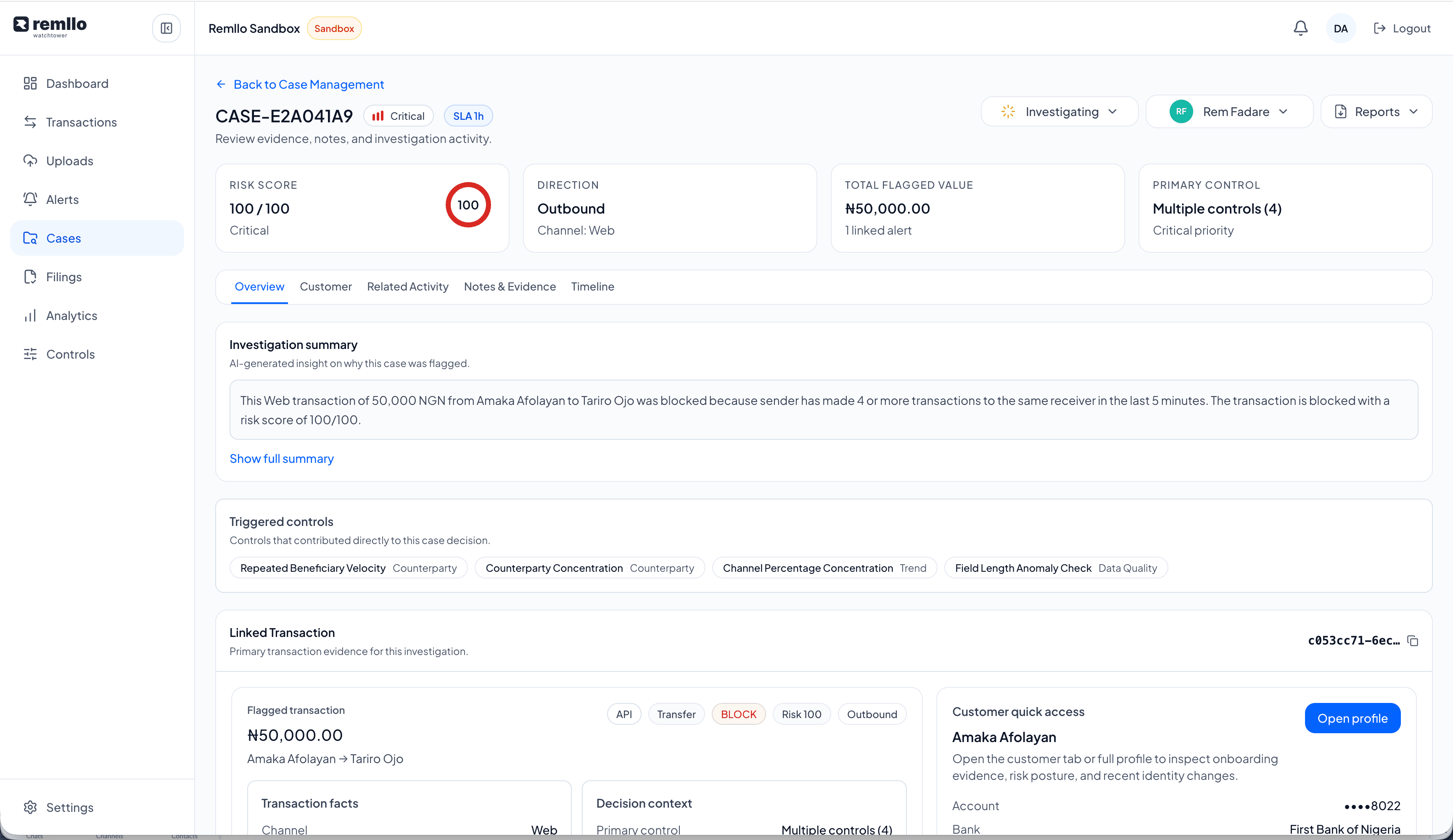
Risk context, evidence, controls, ownership, and the linked transaction remain connected.
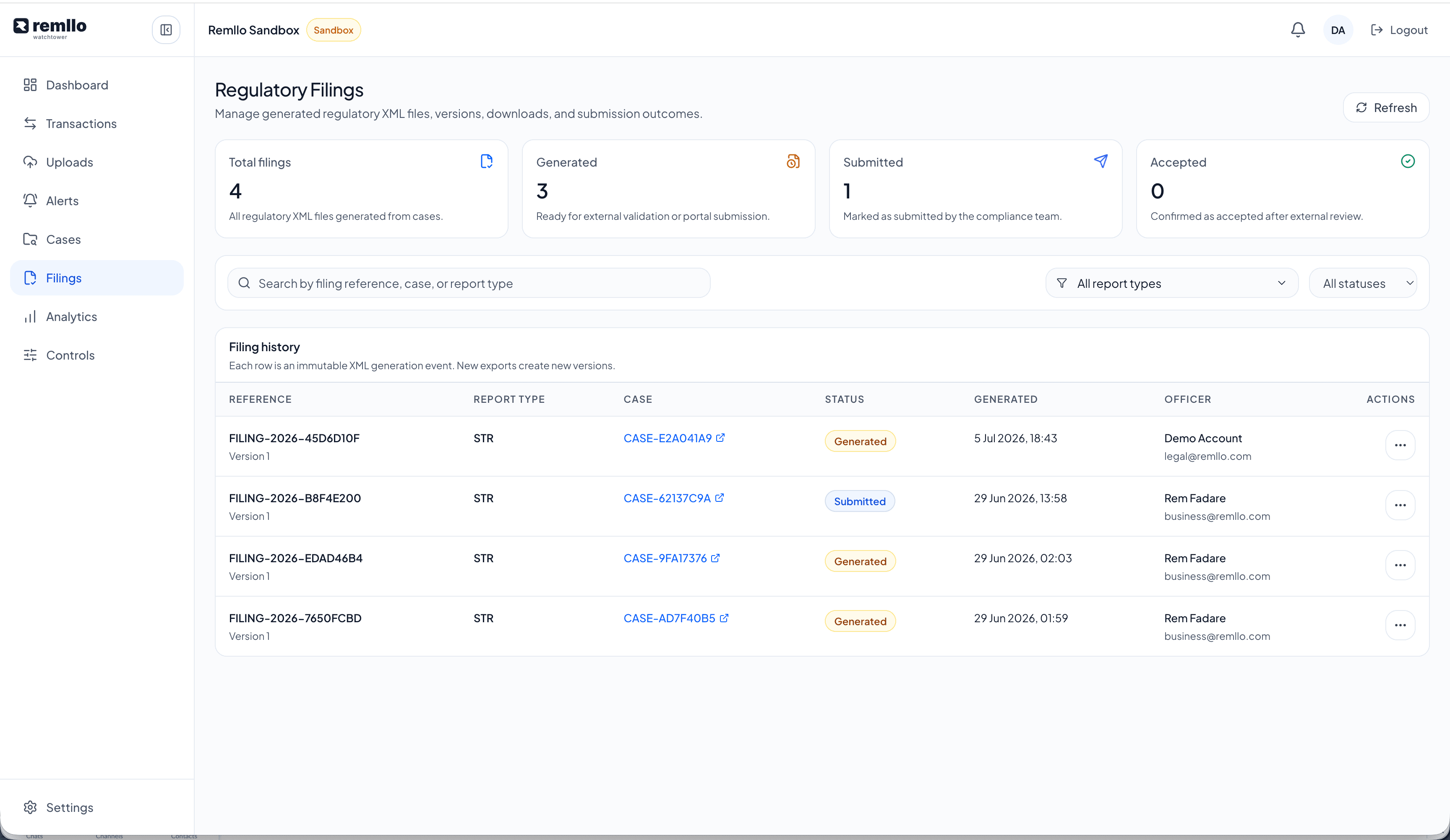
Generated records, versions, submission status, and ownership are visible in one reporting workflow.
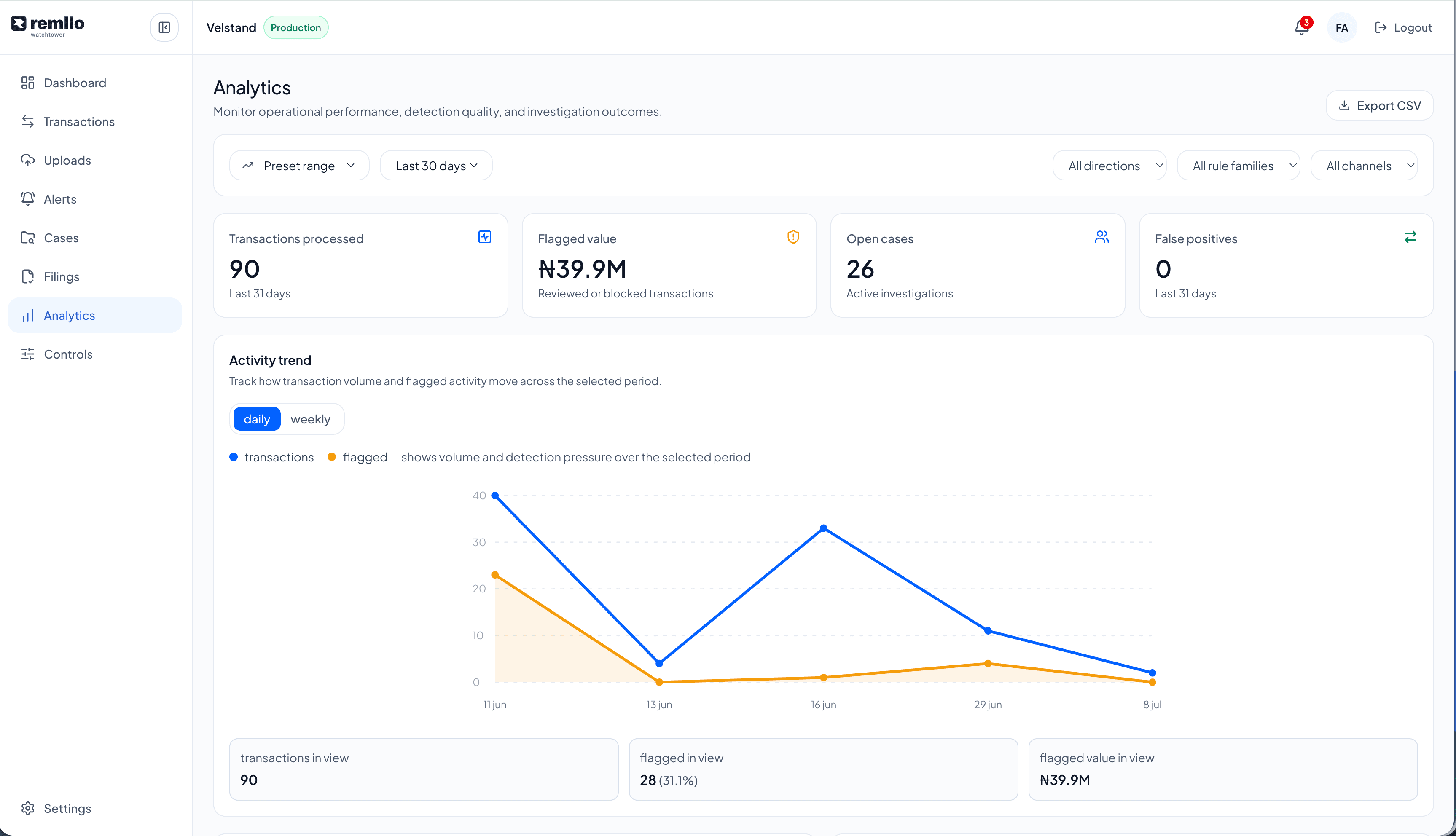
Operational performance, detection quality, and investigation outcomes can be reviewed over time.
High-level workflow
From transaction signal to a traceable action.
This simplified workflow communicates the public product model without exposing proprietary rules, scoring, technical architecture, or implementation details.
- 01
Submit
A transaction enters Watchtower through the connected product or API workflow.
- 02
Evaluate
Rules and relevant risk signals are applied to the transaction.
- 03
Add context
AI assistance can help make suspicious activity easier to interpret.
- 04
Decide
Watchtower returns a clear Allow, Review, or Block outcome.
- 05
Investigate
An alert or case can bring the transaction, context, and analyst work together.
- 06
Record
Actions remain traceable and can support reporting when needed.
09 · Reflection
Trust is part of the product architecture.
Building Watchtower has reinforced that fraud products cannot be measured by detection speed alone. Teams need to understand what the system saw, why the activity matters, and what they are expected to do next.
As a founder, the work has required me to connect product thinking, design, engineering, and company strategy. The challenge is not simply to introduce AI into risk operations. It is to make complex judgement more legible while preserving human accountability.
AI earns trust when it helps people make consequential decisions with more context, control, and confidence.